
deep dive tech single source: Nature News
The Consensus Machine
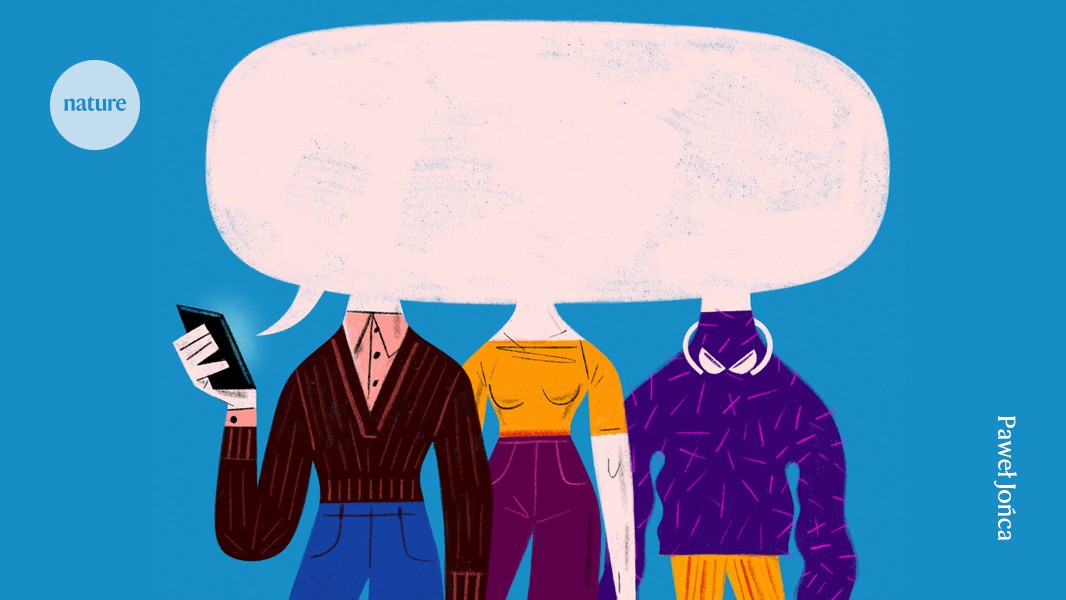
There’s a strange echo in modern thinking. Reading enough contemporary research, particularly in fields like computer science, starts feeling less like discovery and more like pattern recognition—a pervasive sense of déjà vu. Zhivar Sourati, a PhD student at USC, puts it simply: everything is starting to look the same, polished smooth and scrubbed clean of individual idiosyncrasies.
He points the finger squarely at Large Language Models. As we lean harder on these systems to draft thoughts and produce work, our collective writing—and perhaps our collective ways of seeing—is trending toward uniformity.
Sourati draws a parallel to McDonaldization, that sociological idea where systemic efficiency breeds predictable sameness. It sounds sterile, but the implication is far from academic trivia; Emily Wenger, a computer scientist at Duke, frames this as potentially existential. Her question cuts deep: If we delegate the fundamental act of composition—from drafting an email to structuring a narrative—to algorithms trained on massive datasets, what happens to the distinct contours of human consciousness?
We know history has taught us that societies falter when dissenting or "edge voices" are muted.
The data backs up this unease beyond anecdote. In tests involving creative tasks, while LLMs occasionally spit out ideas marginally more inventive than humans, their outputs cluster tightly together compared to the varied sprawl of human responses. Even when assisting in short story writing, AI-aided drafts became structurally more alike across participants.
These trends aren't trapped in labs either; analyzing hundreds of thousands of scientific papers post-ChatGPT launch reveals an increase in content similarity alongside higher publication rates per author.
Perhaps the most subtle danger lies in culture itself. Experiments show that when individuals from vastly different backgrounds use autocomplete tools to articulate their values or traditions—say, describing festivals or heroes—the resulting language begins to merge. Nuance gives way to a statistically probable average.
This isn't about machines replacing genius; it’s about outsourcing originality until we start inhabiting a shared, perfectly optimized mediocrity.
← all posts
Comments
Loading comments…