

news tech single source: Quanta Magazine
When the Universe Decides to Be Unreliable: Cracks in the Cosmic Story
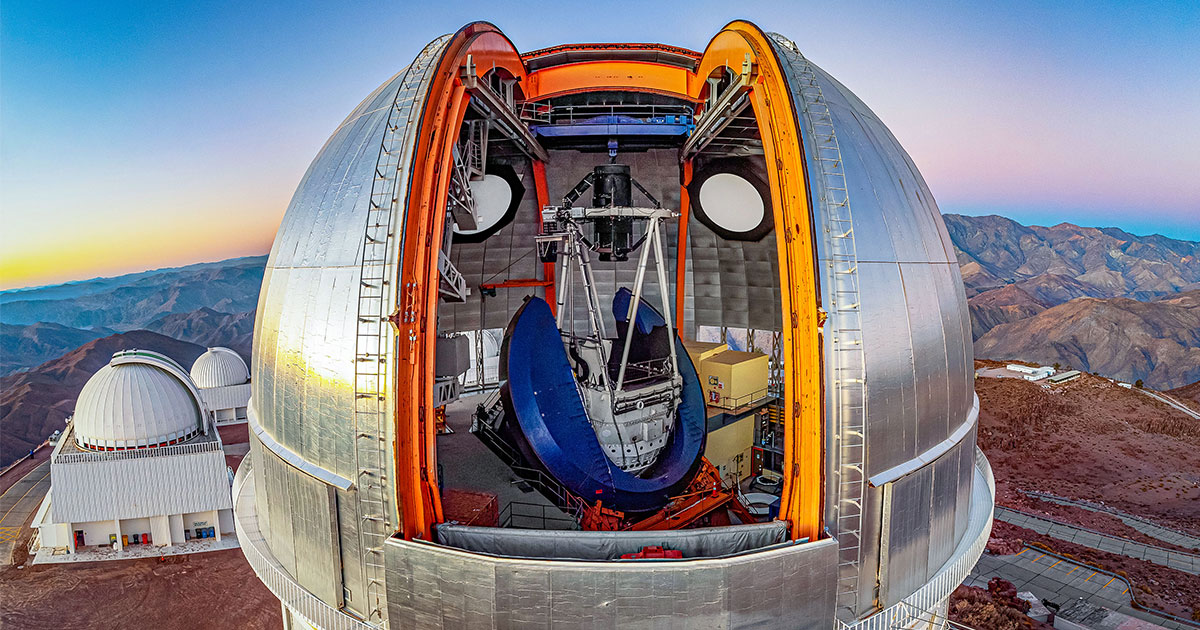
It’s funny how certainties work. You pour years, maybe decades, into building a beautiful, elegant story about reality—a model so sturdy it becomes the default setting for how we understand everything. For a long time in cosmology, that story was Lambda-CDM.
It explained so much: the expansion of the universe, the pull of gravity, and that mysterious push pushing galaxies apart. Dark energy became the engine room of existence, making up roughly two-thirds of everything.
But then the data arrives. And data, bless its meticulous heart, rarely behaves like a perfectly written novel. It tends to be more like reconstructing a life from a sprawling dossier—report cards mixed with utility bills and cholesterol tests.
I remember reading about Joshua Frieman's early days on this topic; it sounds almost absurdly small at first glance. Back in 1997, when he and his colleagues started planning workshops around this "missing energy," only a few dozen people signed up. A niche idea! Then came those bombshell findings in early 1998—supernovas racing away under some unseen repellent force.
Suddenly? It was "kind of a circus." Everyone wanted to be part of the narrative shift.
For twenty years after that initial shockwave, DES tracked this dark energy relentlessly across billions of years using thousands of supernovas and hundreds of millions of galaxies. The picture seemed solid: 30% matter (dark and visible), 70% dark energy acting as an unchanging property woven into space itself ($\Lambda$). Stability reigned supreme within our established framework.
Yet, May 2026 brought something different. When DES findings were cross-referenced with sharper data from DESI, Simone Ferraro pointed out what many have been sensing quietly: “There appear to be cracks in that model.” After two decades where the story felt complete enough to write textbooks by, the field is sliding back into confusion again.
This isn't necessarily a failure; it feels more like a profoundly exciting reset button being pressed by reality itself. Ferraro noted that this return to uncertainty is "certainly enough to make you either uncomfortable or excited." That duality—the discomfort when your most trusted map starts showing errors versus the sheer thrill when you realize there’s uncharted territory waiting—that’s where real discovery lives.
It makes me think about how we approach big ideas generally—whether it’s physics or something else entirely we try to structure into neat narratives for ourselves or others. We build these towering structures based on what fits together logically right now, but sometimes the raw input just demands another layer added on top, or perhaps even tears down the foundation altogether until we can rebuild something richer and stranger underneath it all.
What do you think? Does this sudden wobble in cosmic certainty feel more like scientific panic or genuine intellectual liberation?
Comments
Loading comments…